
Glaucoma Symptoms & Warning Signs
Glaucoma is called the silent thief of sight for a reason. It destroys peripheral vision slowly and painlessly, with no warning until a significant portion of the optic nerve is already gone. Knowing who is at risk and catching it early is the only way to protect what you have.
Symptoms you should never ignore
Open-angle glaucoma is almost always asymptomatic until the damage is advanced. That is why screening matters more than waiting for symptoms. However, acute angle-closure glaucoma is a medical emergency with very obvious signs that must be treated within hours.
Gradual loss of peripheral (side) vision, usually in both eyes, often only noticed when it is already significant
Tunnel vision in advanced stages: vision narrows to a central island as peripheral sight is lost
Halos around lights, especially at night: a possible sign of raised eye pressure affecting the cornea
Blurred or hazy vision that comes and goes, particularly in one eye
Frequent changes in spectacle prescription without a clear explanation
Seek emergency care immediately if you experience sudden severe eye pain, a dramatic drop in vision, nausea or vomiting alongside eye pain, or rainbow-coloured halos. These are signs of acute angle-closure glaucoma, a sight-threatening emergency.
How glaucoma damages the eye
Inside the eye, a clear fluid called aqueous humour is constantly produced and drained. When the drainage system becomes partially blocked, fluid builds up and pressure inside the eye rises. That elevated pressure, over months and years, gradually crushes the delicate fibres of the optic nerve, the cable that carries visual information from the eye to the brain.
Open-angle glaucoma, the most common type, develops so slowly that most people have no idea anything is wrong. The peripheral (side) vision goes first, and the brain compensates by filling in the gaps. By the time the central vision is affected, a large portion of the optic nerve may already be destroyed, and that damage is permanent.
Not all glaucoma is caused by high pressure. Normal tension glaucoma occurs when the optic nerve is damaged despite eye pressure being within the normal range, suggesting that blood flow to the nerve plays a role too. This is more common in people of Asian descent, including South Indians.
Types of glaucoma
- Open-angle glaucoma: slow, painless, most common type
- Acute angle-closure glaucoma: sudden, painful, vision emergency
- Normal tension glaucoma: optic nerve damage with normal pressure
- Secondary glaucoma: caused by diabetes, injury or steroid use
- Congenital glaucoma: present from birth, rare
- Pigmentary glaucoma: pigment disperses into drainage channels
Risk factors that make screening essential
Glaucoma can affect anyone, but certain people carry a significantly higher risk. If any of these apply to you, a yearly check is not optional: it is necessary.
Family history
Having a parent or sibling with glaucoma raises your own risk by four to nine times. This is the single strongest risk factor after age. Tell your ophthalmologist if glaucoma runs in your family.
Age over 40
The risk of glaucoma rises steadily with age. In India, glaucoma affects roughly 1 in 8 people over 60. Routine screening after 40 is the most reliable way to catch it before damage becomes significant.
Diabetes
Diabetes increases the risk of several eye conditions, including glaucoma. Elevated blood sugar affects the blood vessels supplying the optic nerve and can also cause a secondary form of glaucoma by blocking the drainage angle.
High short-sightedness
People with significant myopia (short-sightedness) have thinner-than-normal optic nerve fibre layers, making them more vulnerable to pressure-related damage even at pressures that would not affect eyes with normal vision.
Long-term steroid use
Steroids used as eye drops, tablets or inhalers over a long period can raise eye pressure significantly in susceptible individuals, leading to steroid-induced glaucoma. Regular pressure checks are essential for anyone on long-term steroids.
Previous eye injury
A blunt or penetrating eye injury can damage the drainage angle immediately or trigger progressive changes over years, leading to traumatic glaucoma. Any history of eye trauma warrants regular pressure monitoring.
How we detect and manage glaucoma
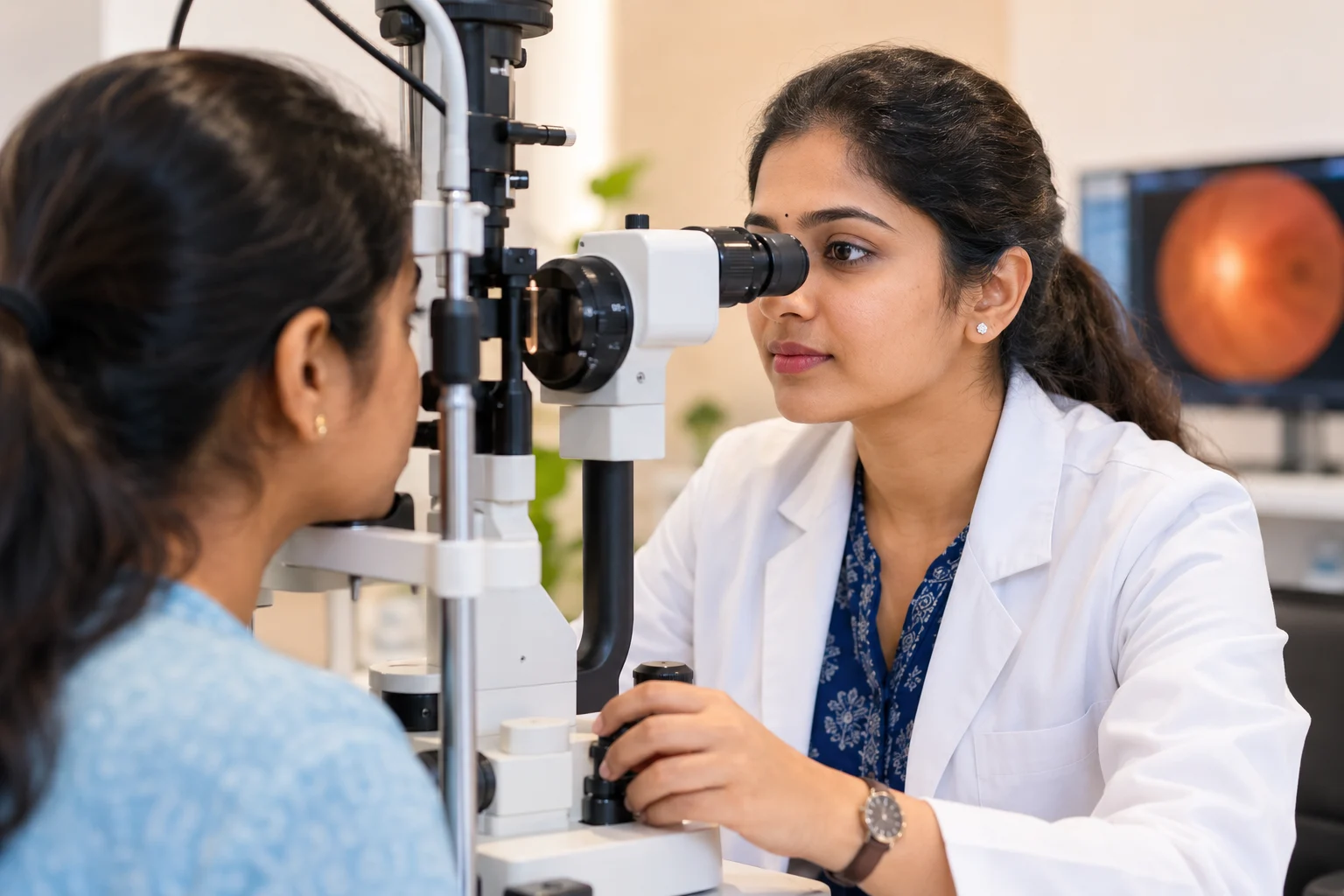
Glaucoma diagnosis requires more than a single pressure reading. A comprehensive assessment maps the optic nerve, checks the drainage angle, measures the corneal thickness, and tests the full visual field. Together, these give a complete picture of the risk and the extent of any existing damage.
Pressure & nerve assessment
Eye pressure is measured with a non-contact or contact tonometer. The optic nerve is examined under dilation, and OCT imaging provides a detailed cross-section of the nerve fibre layer, detecting thinning before it causes symptoms.
Visual field testing
A computerised visual field test maps the full extent of your peripheral vision. It detects early defects invisible to standard eye charts and tracks whether glaucoma is stable or progressing over time.
Lifelong management
Glaucoma requires ongoing treatment. Eye drops to lower pressure are the first step; laser trabeculoplasty and surgical options like trabeculectomy are considered when drops are insufficient. Regular follow-up is essential: glaucoma management is a lifelong commitment.
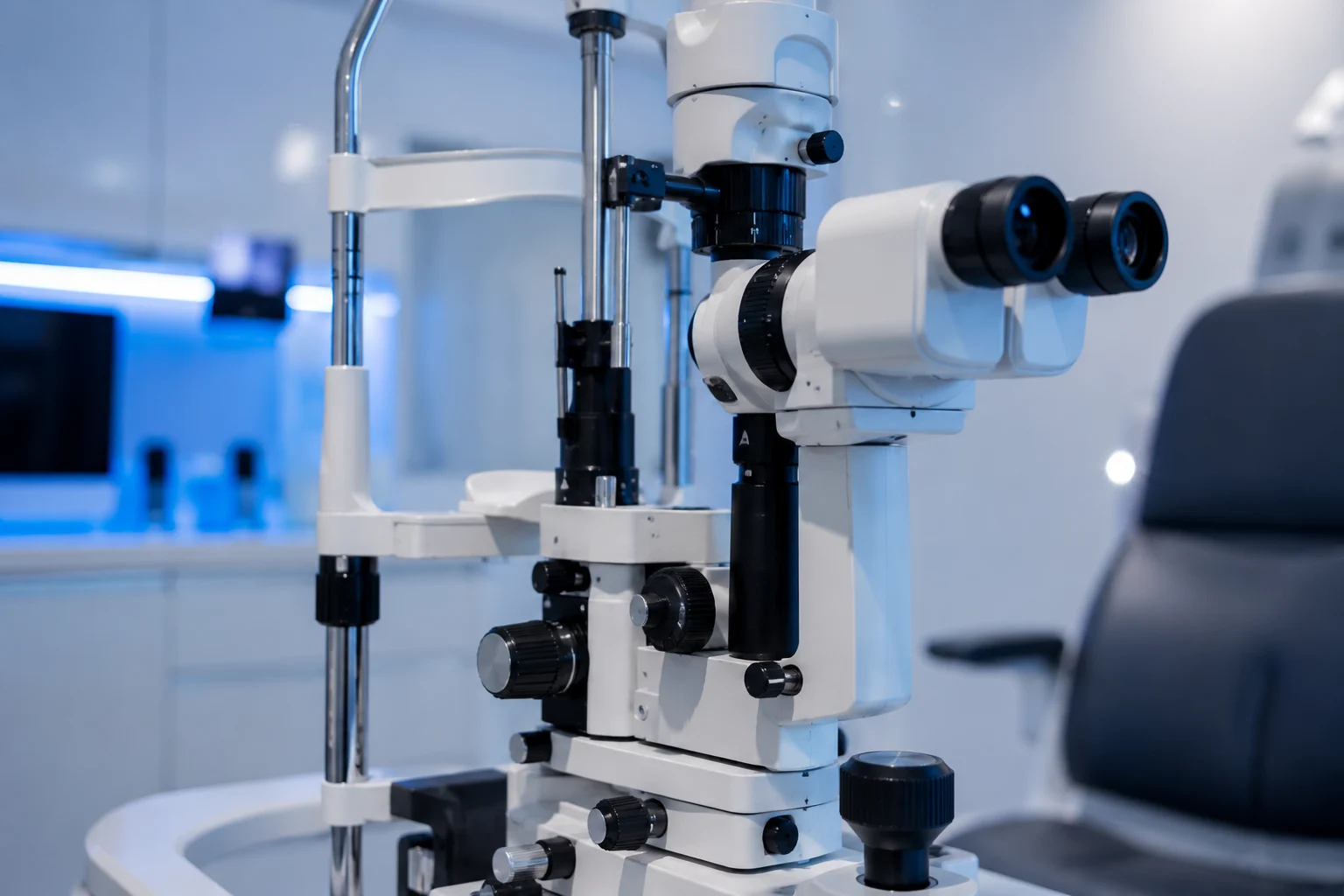
For a full explanation of glaucoma investigation and treatment options, visit our Glaucoma Care page. You can also explore the diagnostic equipment we use to assess optic nerve health.
Glaucoma questions, answered clearly
What patients in Perambur and across Chennai most commonly ask when they are told they may have glaucoma or are being screened for it.
No. The most common form, open-angle glaucoma, causes no pain at all. Pressure builds inside the eye gradually and silently, damaging the optic nerve before any symptoms appear. Pain, redness and sudden blurring are associated with acute angle-closure glaucoma, which is less common but a medical emergency requiring immediate treatment.
Glaucoma cannot be cured, but it can be controlled very effectively. With the right treatment (eye drops, laser therapy or surgery) eye pressure is lowered and the remaining optic nerve is protected. Vision that is already lost cannot be recovered, which is precisely why early detection matters so much.
Everyone over 40 should have a glaucoma check at their routine eye examination. Annual screening is especially important for people with a family history of glaucoma, those with diabetes, individuals with significant myopia, and anyone on long-term steroid medications.
Glaucoma is detected through a combination of tests: eye pressure measurement (tonometry), optic nerve examination under dilation, visual field testing to map peripheral vision, and OCT imaging of the optic nerve fibre layer. None of these is painful and all can be completed in a single clinic visit at Aadithya Eye Care.
Medical sources
- American Academy of Ophthalmology. Eye health information.
- National Eye Institute, National Institutes of Health. Eye conditions and diseases.
- All India Ophthalmological Society. aios.org.
Glaucoma that is caught early stays manageable.
Most people who lose vision to glaucoma never knew they had it until it was too late. A pressure check and optic nerve assessment at Aadithya Eye Care in Perambur takes under 30 minutes and could protect your sight for decades. Dr Vasantha Gowri sees patients Monday to Saturday, 10:00 am to 2:00 pm and 6:00 pm to 9:00 pm.