
How often should you
get an eye checkup?
The honest answer is: more often than most people do. The right frequency depends on your age, whether you have diabetes or a family history of glaucoma, and what was found at your last visit. Here is how to think about it properly.
Eye checkup schedule to from childhood to senior years
The eye changes at different rates at different stages of life. The conditions most likely to affect you at 10 are not the same as at 50 or 70. Here is how the schedule should shift accordingly.
First check by age 3, then before school entry
Lazy eye (amblyopia) and squint are most treatable in early childhood to but they cannot be diagnosed without an examination. A child will rarely complain of blurred vision; they simply assume what they see is normal. Parents should watch for squinting, head tilting, sitting very close to screens, and frequent eye rubbing. These warrant an immediate check regardless of age. See our paediatric and squint clinic page for what we look for.
Every 1 to 2 years, sooner if myopia is progressing
Myopia (short-sightedness) typically develops and worsens rapidly between ages 8 and 18, particularly in children with significant screen time. A prescription that was fine six months ago may no longer serve them. If myopia is already present, annual checks allow for myopia control interventions before the prescription escalates significantly. Read more about computer vision and myopia control at Aadithya Eye Care.
Every 2 years if no symptoms or risk factors
Most adults in this age group have stable vision and healthy eyes, but that does not mean skipping checks entirely. A two-yearly examination is a reasonable baseline. If you experience headaches, eye strain from screen use, blurred near vision, or floaters, do not wait for your next routine check to come in sooner. This is also the best time to address myopia correction options including LASIK or SMILE if spectacle freedom matters to you.
Every year to glaucoma and presbyopia screening essential
Forty is the age at which the risk profile of the eye changes substantially. Presbyopia (difficulty reading without glasses) begins, glaucoma risk increases, and the lens starts to show early cataractous changes in some patients. From 40 onwards, annual eye pressure measurement and optic disc examination are not optional extras to they are part of responsible preventive health. Patients with a family history of glaucoma should start these checks at 35.
Every 6 months to cataract, glaucoma, and retinal monitoring
By the seventh decade, the majority of people have some degree of lens clouding, elevated glaucoma risk, and in many cases, early age-related macular changes. Six-monthly checks allow us to monitor all three simultaneously and to time cataract surgery appropriately rather than reactively. Delaying the first assessment until vision has already deteriorated significantly means missing the window for the most effective intervention.
Who needs checks more often
Certain health conditions and family histories significantly raise the probability of serious eye disease. These groups should not wait for standard intervals.
People with diabetes
Diabetic retinopathy can develop silently and progress to vision-threatening stages without warning symptoms. Annual dilated fundus examination is the minimum; six-monthly if any retinopathy is already present. Blood sugar control affects how fast it progresses. See our diabetic eye care page.
Family history of glaucoma
First-degree relatives of glaucoma patients have a 4 to 9 times higher risk of developing it themselves. Annual pressure measurement and optic disc assessment should begin at 35, not 40. Glaucoma detected early can be treated with simple eye drops; detected late, it may require surgery and vision loss may already have occurred.
High myopia (above to 6D)
High myopes have a structurally stretched retina that is more prone to tears and detachment. Annual dilated retinal examination is important even if vision is corrected and comfortable. Any sudden increase in floaters or flashing lights should be treated as an urgent situation requiring same-day assessment.
Long-term steroid users
Steroid medications to oral, inhaled, or topical to used for prolonged periods increase the risk of posterior subcapsular cataract and raised eye pressure. Any patient on long-term steroid therapy should have annual eye pressure checks and lens assessment, regardless of age.
Hypertension and cardiovascular disease
Uncontrolled high blood pressure can affect the blood vessels supplying the retina, causing haemorrhages and vascular occlusions. Patients with hypertension or a history of stroke should include regular retinal assessment in their health monitoring alongside their general physician's care.
Post cataract or LASIK surgery
Even successful surgery requires periodic monitoring. After cataract surgery, the posterior capsule can cloud over in the months to years following the procedure. After LASIK or SMILE, annual pressure measurements are important as the cornea's post-surgical structure can affect standard IOP readings.
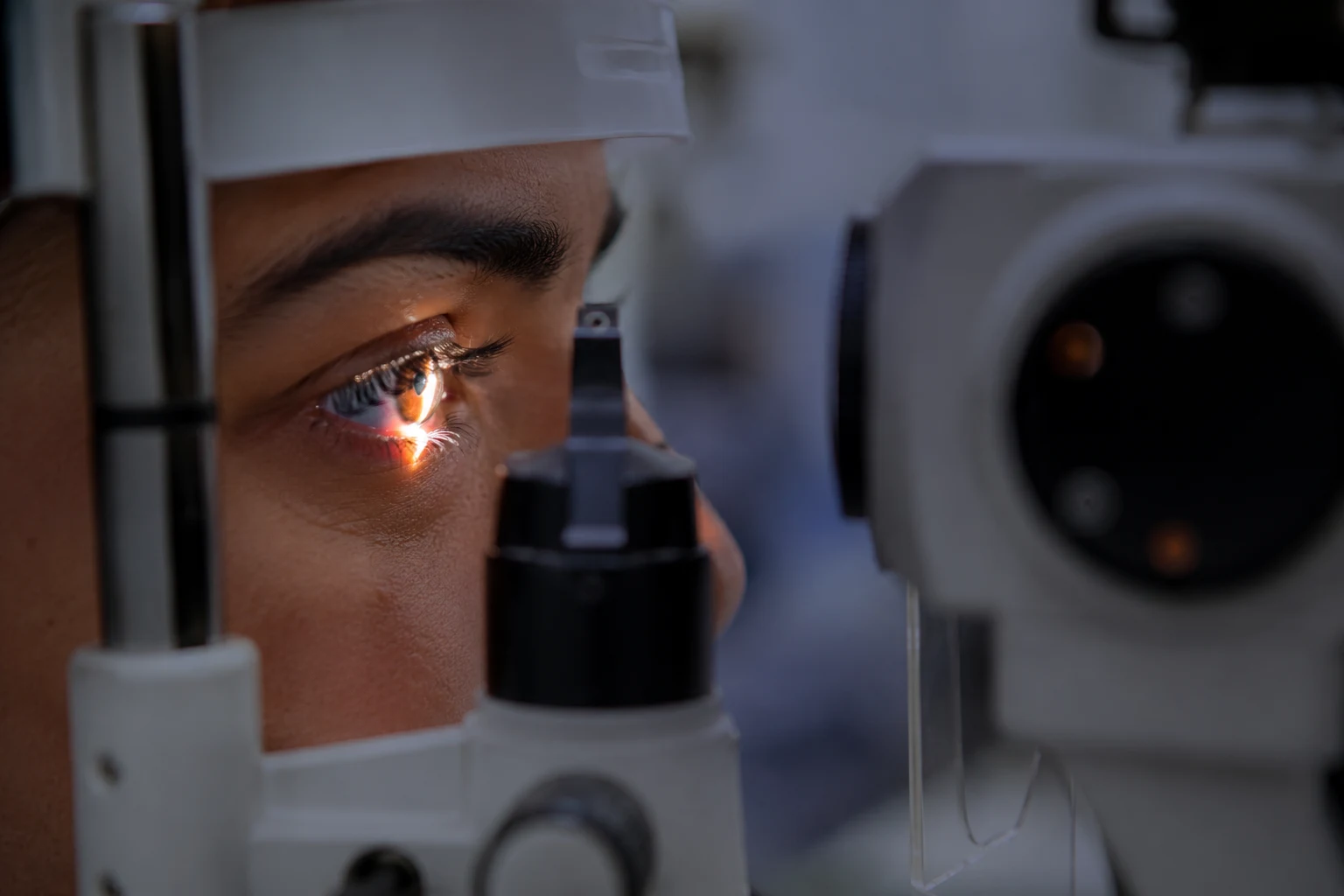
What happens in a proper eye examination
A routine visit at Aadithya Eye Care is not just a vision check with a chart. Dr Vasantha Gowri has been examining patients for over 25 years, and a standard examination covers more ground than most patients expect.
The assessment typically includes visual acuity measurement, refraction (checking whether a prescription is needed or has changed), intraocular pressure measurement with a non-contact or applanation tonometer, slit-lamp examination of the anterior segment including the cornea and lens, and dilated fundus examination to view the retina and optic disc. Where indicated, additional investigations such as corneal topography, OCT or visual field testing are arranged from the in-house diagnostics unit.
Visual acuity and refraction
Checks if your prescription has changed and whether you need new glasses.
Intraocular pressure
A quick, painless measurement to screen for glaucoma risk.
Retina and optic nerve
A dilated view to check for diabetic changes, macular health, and glaucoma.
What I tell patients
who skip their checkups
The patients I worry about most are the ones who only come in when something is obviously wrong. By then, the question has shifted from prevention to damage control. Glaucoma caught at early-moderate stage can be managed effectively with a single daily eye drop. Glaucoma caught at an advanced stage to after years without treatment to may need surgery and still leave permanent vision loss behind.
Many patients come from across north Chennai to Kolathur, Madhavaram, Villivakkam, Ayanavaram to and they frequently mention that they did not realise an annual check was important if nothing seemed wrong. That assumption is understandable. It is also what makes silent conditions so dangerous. A yearly visit to Aadithya Eye Care takes thirty minutes and covers everything I described above. If everything is normal, you leave with the reassurance that it is normal. If something is found early, that early finding is the most valuable thing I can offer.
If you have diabetes, the conversation is even more direct: the back of your eye records damage before your vision changes. By the time you notice the vision change, you may be looking at something that cannot be fully reversed. Annual dilated fundus examination is not optional for a diabetic patient to it is part of managing the disease.
Aadithya Eye Care, Perambur
Eye checkup questions
answered plainly
Medical disclaimer: The frequency recommendations on this page are general guidance. Your specific situation may warrant more frequent monitoring. Always discuss the right schedule for your eyes with a qualified ophthalmologist. Content reviewed by Dr Vasantha Gowri, MBBS, DO (Ophthalmology), FICO (UK), FRCS (Glasgow), Aadithya Eye Care, Perambur, Chennai.
More about your eye health
Comprehensive Eye Examination
What a full eye check at Aadithya Eye Care involves to from vision testing to retinal assessment.
Read moreDiabetic Eye Care
How diabetic retinopathy develops and how we screen and treat it at Aadithya Eye Care.
Read moreGlaucoma Care
Treatment options for glaucoma, from medical management to surgical intervention in Perambur.
Read moreCataract vs Glaucoma
Understanding the key differences between these two common causes of vision loss in India.
Read moreDiabetes and Eye Health
How diabetes affects every part of the eye and what can be done to protect your vision.
Read morePaediatric Eye Care
Children's eye examinations, squint treatment, and lazy eye management at Aadithya Eye Care.
Read moreMedical sources
- American Academy of Ophthalmology. Eye health information.
- National Eye Institute, National Institutes of Health. Eye conditions and diseases.
- All India Ophthalmological Society. aios.org.
Book an eye examination at Aadithya Eye Care, Perambur
A complete eye check covers vision, pressure, lens health and a dilated view of your retina to all in one visit. Walk-ins are welcome, or book ahead for a confirmed time slot.