
Why is my vision blurry?
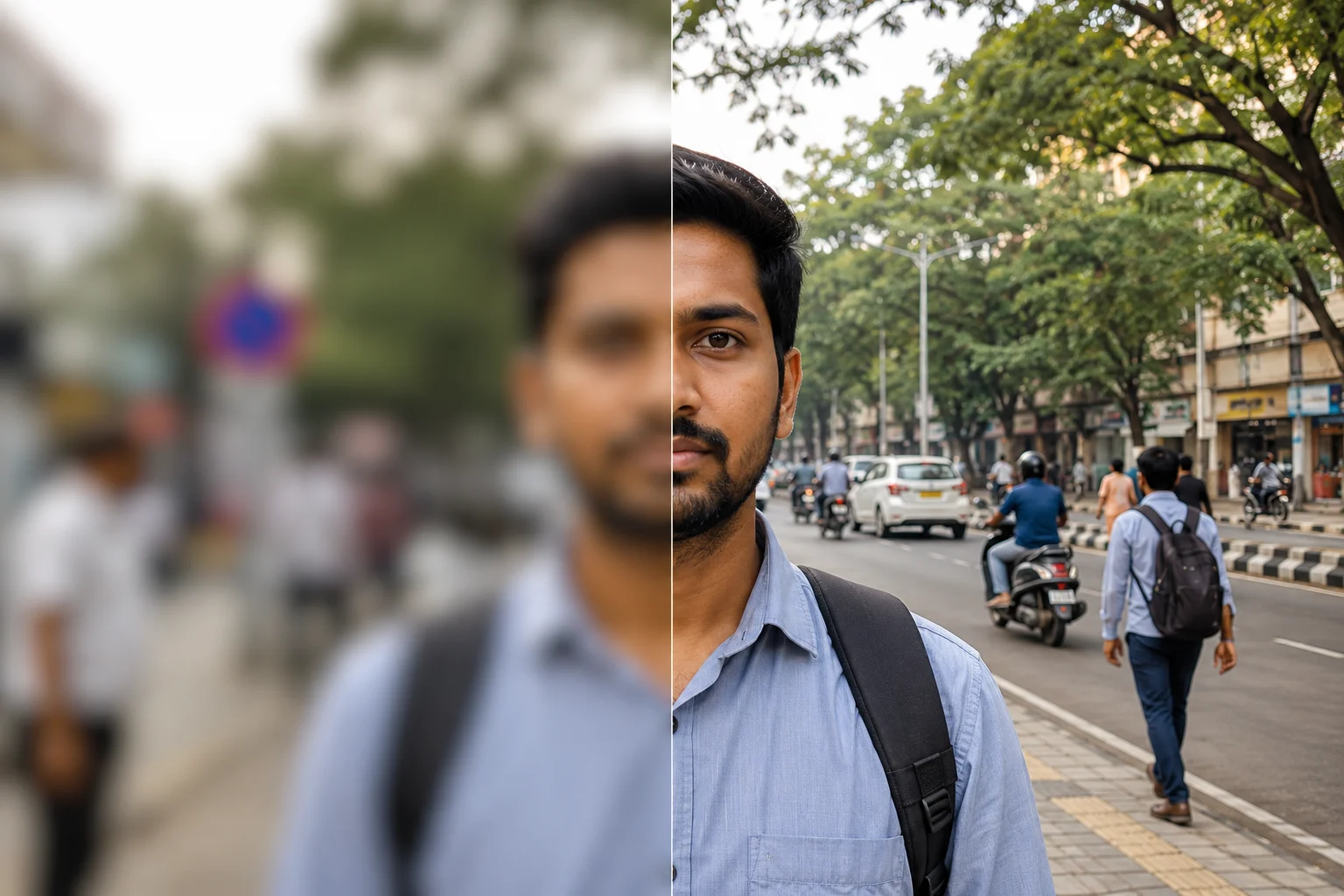
Blurred vision is a symptom, not a diagnosis. Six different conditions can cause it, from something as straightforward as needing new glasses to something that needs urgent attention. The only way to know which is yours is a proper examination.
Signals that should not wait
Some blurring can be monitored and addressed at a routine appointment. These signs should prompt an earlier visit, or immediate emergency care.
Sudden onset in one eye
Rapid blurring in a single eye, with or without pain, can indicate a retinal detachment, vascular occlusion or acute glaucoma. Seek same-day assessment.
Blurring with new floaters or flashes
A shower of new floaters combined with flashing lights and blurred vision is a classic warning of a retinal tear or early detachment. This is a time-sensitive emergency.
Blurring with severe headache or eye pain
The combination of pain, blurring, nausea and halos around lights strongly suggests acute angle-closure glaucoma, a sight-threatening emergency requiring immediate treatment.
Blurring with double vision
Double vision alongside blurring, especially with facial drooping, weakness or speech difficulty, may indicate a neurological emergency requiring urgent hospital assessment.
Gradual worsening despite new glasses
If vision remains blurred even after getting a new prescription, the cause is unlikely to be a simple refractive error. A dilated examination is needed to look deeper.
Fluctuating blur that clears with blinking
Blurring that improves momentarily when you blink is typically a sign of dry eye or tear film instability, very common, very treatable, but worth addressing before it worsens.
If vision blurs suddenly and severely, do not wait for an appointment, call us immediately or go directly to an emergency eye centre. Quick action can be the difference between preserving and losing vision permanently.
Six conditions that make vision blur
Blurred vision is one of the most common reasons people visit an eye clinic, and also one of the most misunderstood. Patients often assume it means they need stronger glasses. Sometimes that is true. But blurring can also be the first sign of a cataract, early glaucoma, diabetic damage to the retina, or a corneal problem, each requiring a completely different treatment.
Refractive errors
Short-sightedness, long-sightedness and astigmatism all cause blurring because light does not focus precisely on the retina. The fix is glasses, contact lenses or laser surgery like LASIK.
Very commonCataract
A clouded lens scatters incoming light, producing a misty, foggy quality to vision, not simply out of focus. Glare, faded colours and difficulty reading in dim light often accompany it.
Age-relatedGlaucoma
Raised eye pressure silently damages the optic nerve. Central vision stays sharp until late, but blurring at the edges, or sudden severe blurring with pain, can signal serious pressure changes.
Silent damageDiabetic retinopathy
High blood sugar damages the tiny blood vessels in the retina. Fluid leaks into the central retina (macular oedema) and blurs reading vision in a way that glasses cannot correct.
Diabetes-relatedDry eye syndrome
Insufficient or poor-quality tear film leaves the eye surface irregular, causing fluctuating blurriness that clears briefly when you blink. Screen use and air conditioning make it worse.
Very commonCorneal conditions
Keratoconus, corneal scarring and infections distort the corneal surface and produce irregular, hard-to-correct blurring. Specialist contact lenses or surgery may be needed.
Needs investigationWhen to be especially vigilant
Anyone can develop blurred vision, but these groups carry a higher risk of the more serious underlying causes and should not delay getting checked.
People with diabetes
Diabetic macular oedema and retinopathy are leading causes of preventable vision loss. Even if your current vision feels fine, annual retinal screening is essential. Blurring in a diabetic patient is never simply "old glasses" until the retina has been examined.
Adults over 50
Cataracts, age-related macular degeneration and glaucoma all become more prevalent after 50. Blurring in this age group warrants a full dilated examination to rule out conditions that worsen without treatment.
High myopes (very short-sighted)
Significantly short-sighted eyes are longer than normal and the retina is stretched thin. This raises the risk of retinal tears, detachments and macular disease, all of which cause blurring and require prompt attention.
Family history of eye disease
Glaucoma, macular degeneration and certain retinal conditions run in families. If a first-degree relative has been diagnosed with any of these, your own risk is elevated, regular screening from age 40 is strongly advised.
Heavy screen users
Computer vision syndrome and dry eye are responsible for a significant proportion of blurring complaints in younger working-age adults. Blinking rate drops sharply during screen use, and tear film breaks up faster, causing intermittent blurring that often clears with blinking.
Finding the cause and treating it right
Because blurred vision has so many possible causes, the diagnostic process works through them systematically. A thorough examination at Aadithya Eye Care usually identifies the cause in a single visit.
Vision and refraction assessment
A full refraction test measures your exact spectacle power. If a new prescription corrects the blur completely, a refractive error is the cause. If vision remains reduced with the best possible correction, further investigation is needed.
Slit-lamp and lens examination
The slit-lamp microscope lets us examine the cornea, anterior chamber and lens in detail. A cataract, corneal scarring, keratoconus and anterior segment inflammation all become visible here.
Eye pressure and optic nerve check
Tonometry measures eye pressure. A dilated fundus examination lets us inspect the optic nerve and identify glaucomatous cupping. This step is critical for anyone over 40 or with a family history of glaucoma.
Retinal examination
Under dilation, the retina is examined for diabetic changes, macular degeneration, retinal detachments and vascular problems. OCT imaging may be used to view the retinal layers in cross-section if needed.
Treatment matched to the cause
Once the cause is identified, treatment is precise, glasses or LASIK for refractive errors, surgery for cataracts, drops or laser for glaucoma, injections or laser for diabetic macular oedema, lubricants and diet for dry eye. See the relevant service page for each.
Related conditions we treat
Each of the following services addresses one of the conditions that can cause blurred vision.
Blurred vision questions, answered
The questions patients most often ask when they notice their vision is not as sharp as it used to be.
Why is my vision suddenly blurry?
Sudden blurred vision should always be taken seriously. It can be caused by a retinal detachment, a vascular event, acute glaucoma, or bleeding inside the eye. If blurring comes on rapidly, especially in one eye, or with floaters, flashes, headache or facial weakness, seek emergency assessment immediately.
Can blurred vision be fixed with glasses alone?
If the cause is a refractive error, glasses will correct it fully. But if blurring is caused by a cataract, glaucoma, diabetic retinopathy or a corneal problem, glasses will not resolve it. A proper eye examination identifies the true cause first.
Is blurred vision in one eye different from both eyes?
Yes, significantly. Blurring in one eye usually points to a problem within that eye: a cataract, retinal issue or corneal condition. Blurring in both eyes may indicate a refractive error or bilateral cataracts. Sudden one-eye blurring should be treated as urgent.
How long does it take to find the cause?
In most cases a thorough eye examination (vision testing, pressure measurement and a dilated fundus examination) is enough to identify the cause in a single visit. Additional scans may be arranged the same day if needed.
Medical sources
- American Academy of Ophthalmology. Eye health information.
- National Eye Institute, National Institutes of Health. Eye conditions and diseases.
- All India Ophthalmological Society. aios.org.
Blurry vision deserves a real explanation.
Stop guessing and updating your glasses without knowing why your vision is changing. A comprehensive eye examination at Aadithya Eye Care in Perambur will give you a precise diagnosis and a clear plan. Dr Vasantha Gowri sees patients Monday to Saturday, 10:00 am to 2:00 pm and 6:00 pm to 9:00 pm. Also see our cataract symptoms and glaucoma symptoms pages.